STORIES

IRON MIKE

The early history of the NYP Ranger Unit · William "Mike" Brock, 1908–1993

By Ed Waggoner, Operations Chief (ret.), Nevada-Yuba-Placer

1970
Nevada · Yuba · Placer consolidated
2,997
Sq mi of land · three counties
1967
Auburn Station 10 built
2
Redwoods · 1967 & 1993
The Legend and Legacy of NYP's First Unit Chief

Before there was an NYP, there were three counties, three ranger units, and a chief in Auburn who could see what was coming.

Prior to the consolidation of Nevada-Yuba-Placer — NYP — in 1970, Placer County Headquarters was located on Highway 49 just below the city of Auburn — the site that is now the headquarters for Auburn State Recreation Area. The ranger unit chief was William "Mike" Brock.

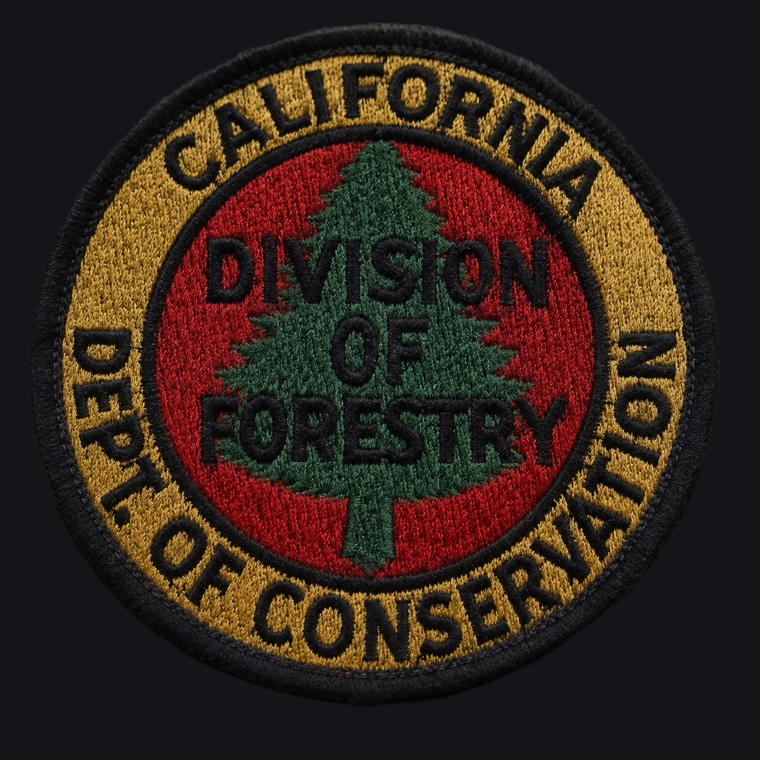
He served in the era this patch belongs to: the California Division of Forestry, under the Department of Conservation. The Division had been part of the Department of Natural Resources since 1927; in the 1961 reorganization that created the Resources Agency, it moved to the newly created Department of Conservation, where it stayed until 1977, when it was elevated to the Department of Forestry. Brock's whole run as a unit chief fits inside that historical window.
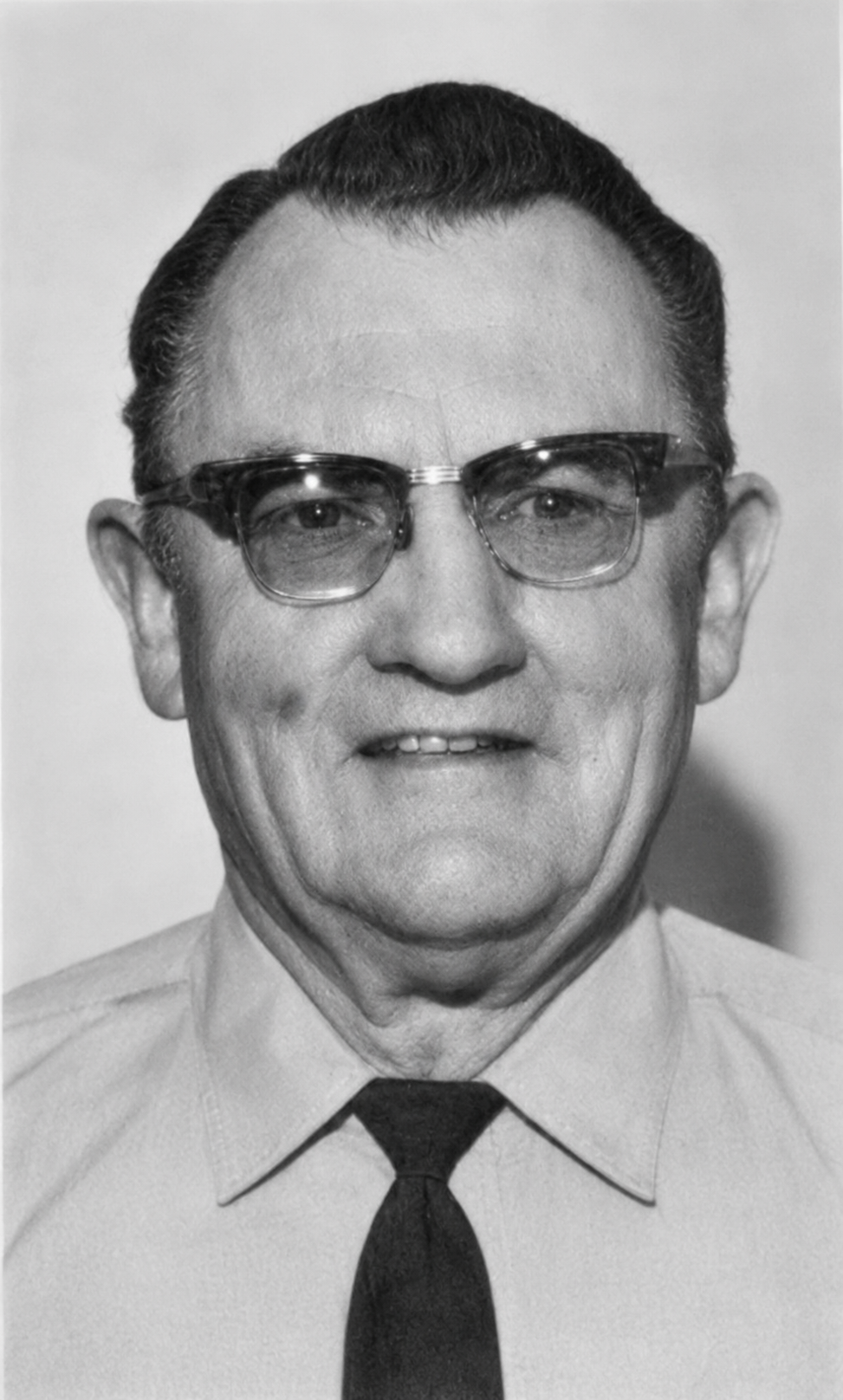
Black and white portrait of William “Mike” Brock in uniform, a star badge on his chest
William “Mike” Brock — first unit chief of the Nevada-Yuba-Placer Ranger Unit, and before that Placer County's.
Embroidered round shoulder patch: California Division of Forestry, Department of Conservation — a green conifer on a red field inside a gold ring
California Division of Forestry · Department of Conservation — the shoulder patch of Brock's era, 1961–1977.
Down on Highway 49

The old yard sat on Highway 49 below town, down where the road drops toward the confluence of the North and Middle forks of the American River. It was a working county headquarters and it did the job, but it was hemmed in — the wrong ground for what the Division was about to become.

Today the State Parks people work out of that same ground. The buildings changed hands; the canyon did not.
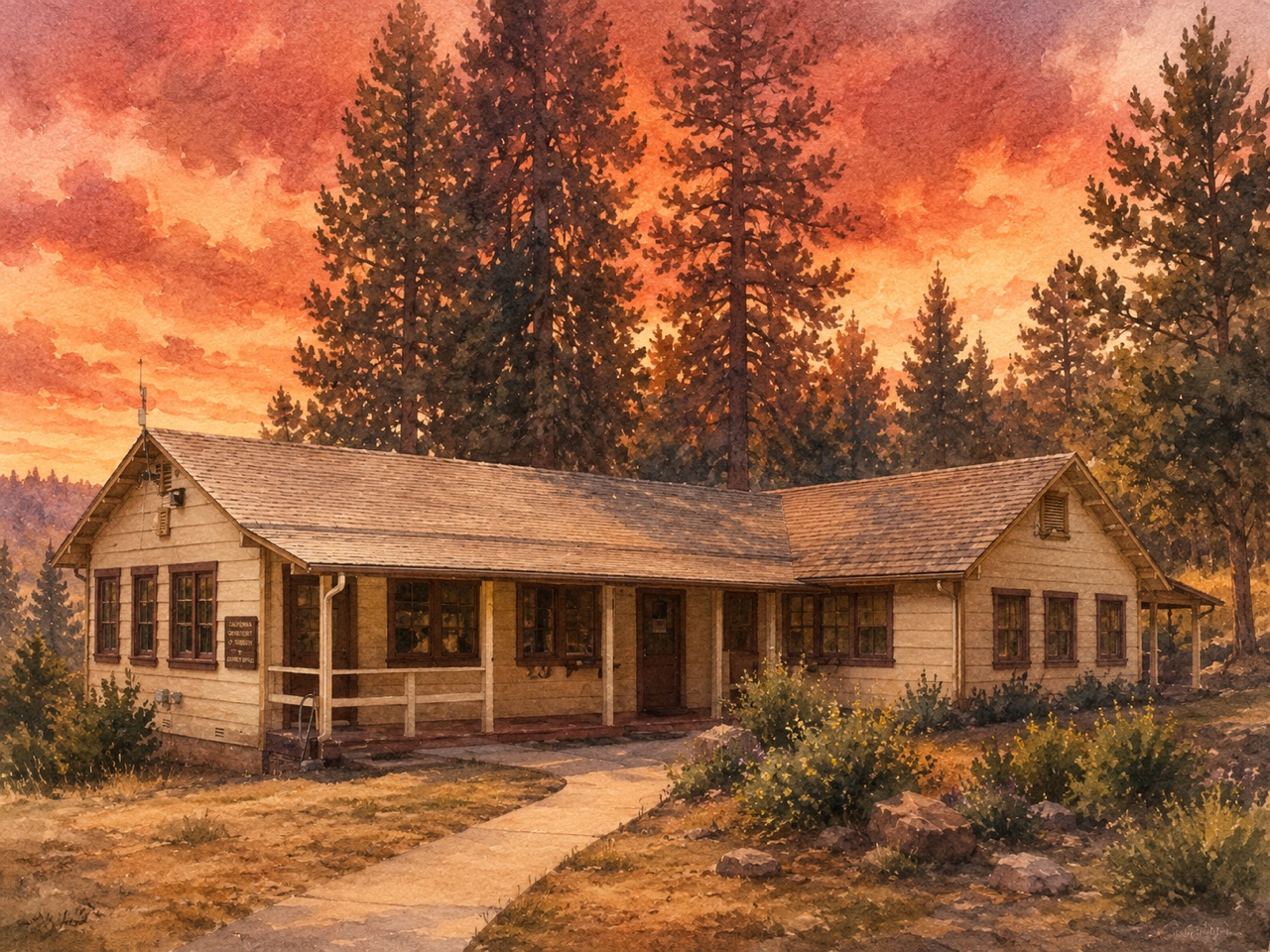
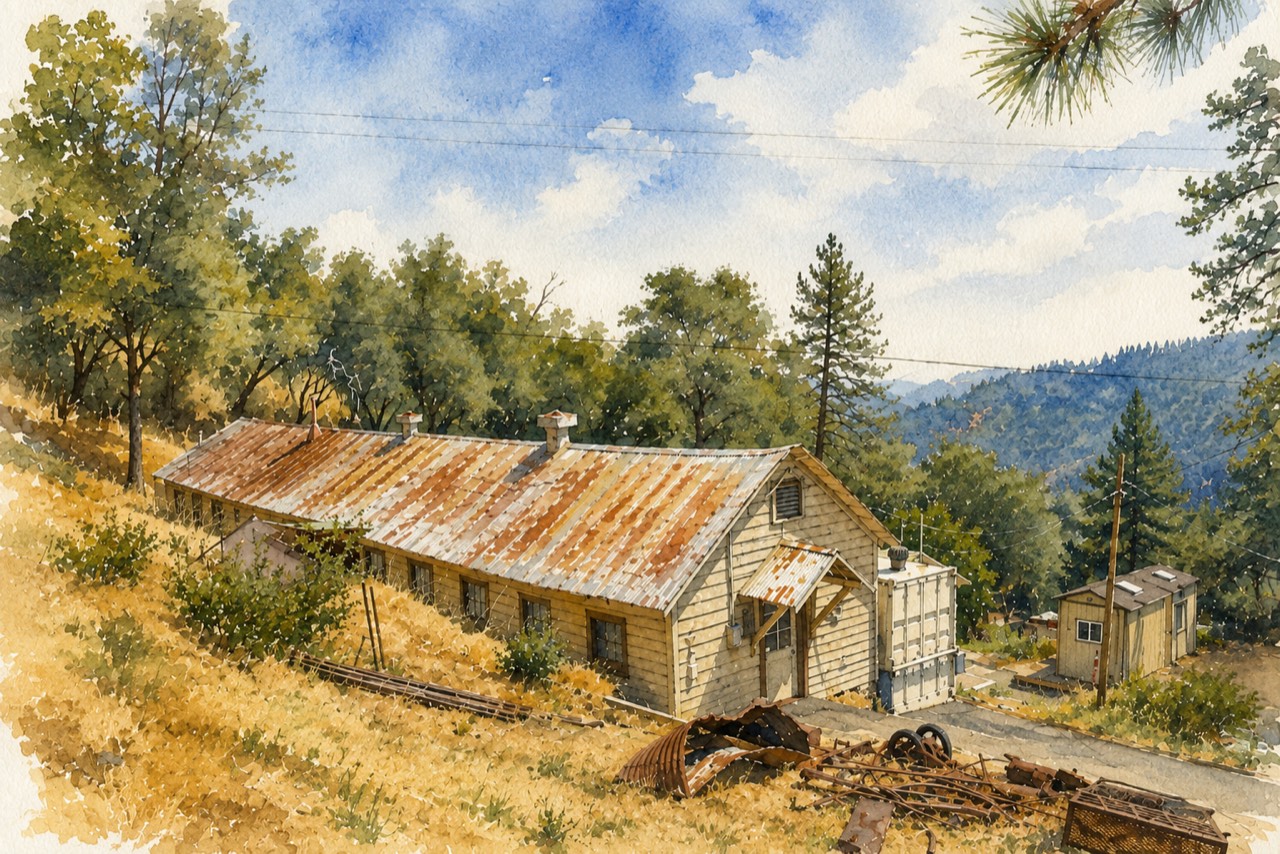
Watercolour of the long single-storey headquarters office building at the old Highway 49 yard, a sign beside the door, pines behind it under a red sunset sky
The headquarters office at the old yard on Highway 49 — the building the unit was run out of before Station 10.
Watercolour of a long single-storey barracks with a rusted corrugated roof, standing on a dry grass slope above a forested canyon
The original sleeping barracks — and behind it, the canyon that outlasted the tenancy.
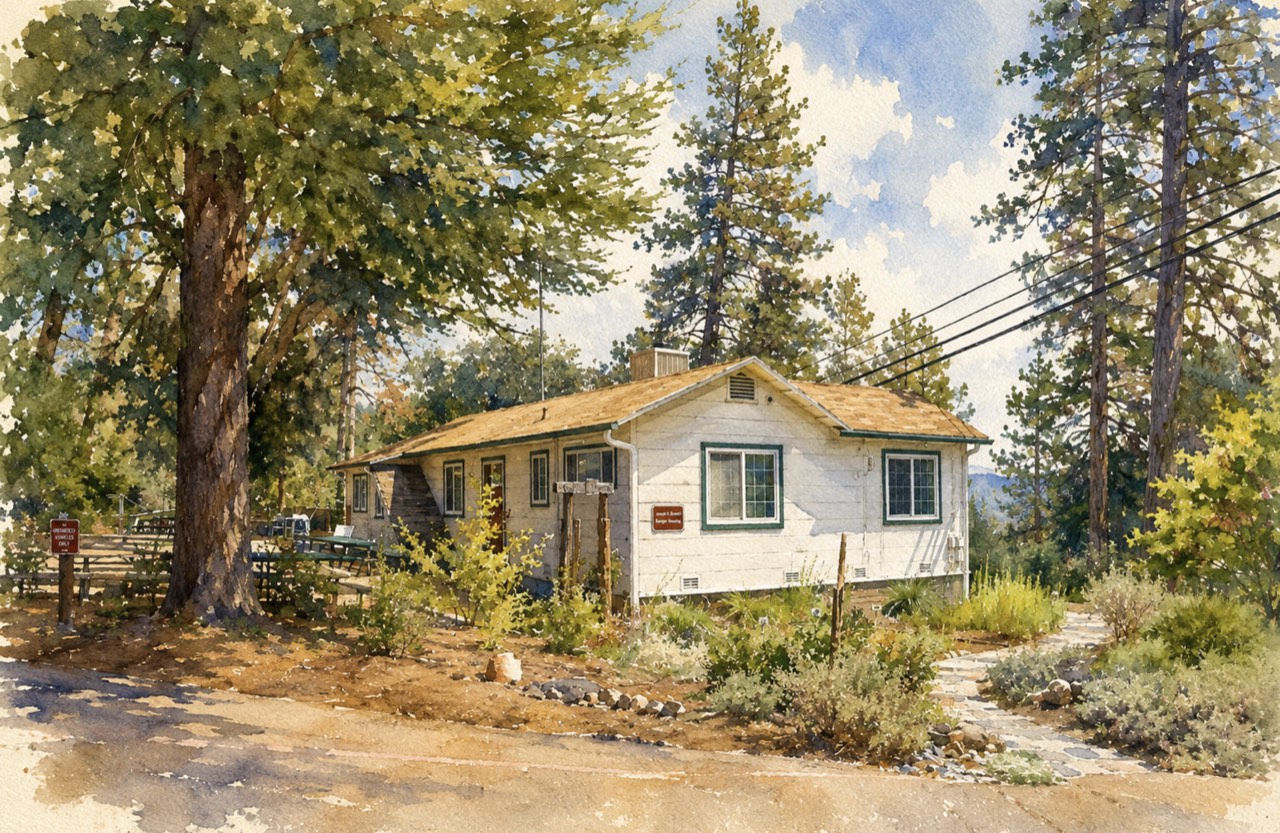
Watercolour of a small white single-storey residence with green window trim, standing under a large conifer beside a dirt road
The ranger residence, 1966 — the last full year before Brock moved the unit up the hill.
The Ground He Picked

In 1965 or 1966, Chief Brock was able to secure a highly desirable piece of property for a new Placer County headquarters station. It was along Interstate 80 above Auburn, on ground that looks out over the American River Canyon. By 1967 he had obtained the funding to build a new headquarters station on that unique piece of property.

That is the part of the story that gets skipped. Anyone can run a unit. Getting the state to buy the right dirt, and then getting it built, is a different kind of work — and it is the reason the rest of this story happened the way it did.

During the building of Auburn Station 10 in 1967, Chief Brock planted a small redwood tree out the back door of the headquarters office building.
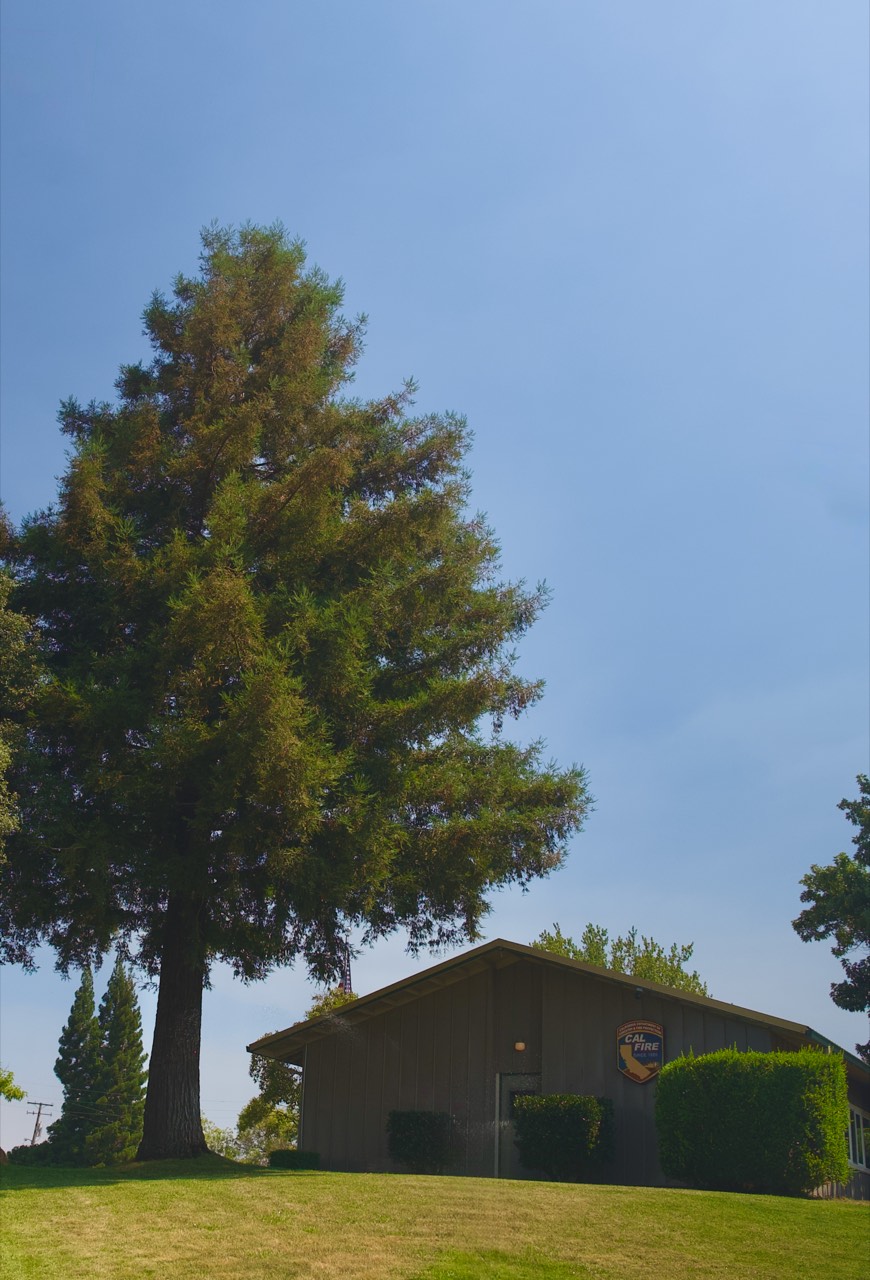
A tall coast redwood towering over the low board-and-batten headquarters building at Auburn Station 10, a CAL FIRE shield mounted on the gable end
Fifty-nine years on — Brock's redwood at the headquarters office building, Auburn Station 10.
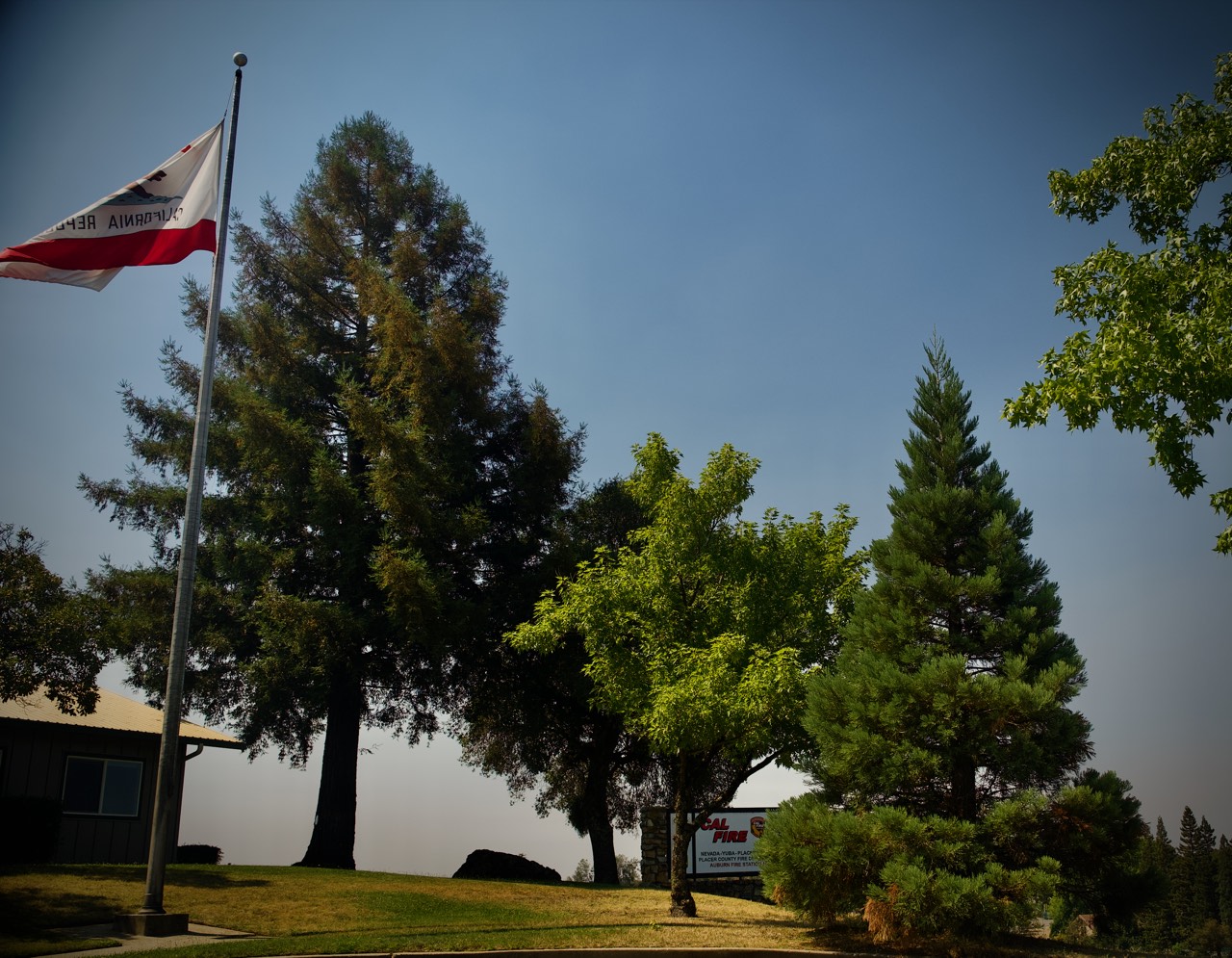
Two redwoods on the Station 10 lawn: a tall mature one beside the flagpole flying the California flag, and a smaller one further right behind the CAL FIRE unit sign
Both of them in one frame — the 1967 tree by the flagpole, the 1993 tree grown up behind the sign.
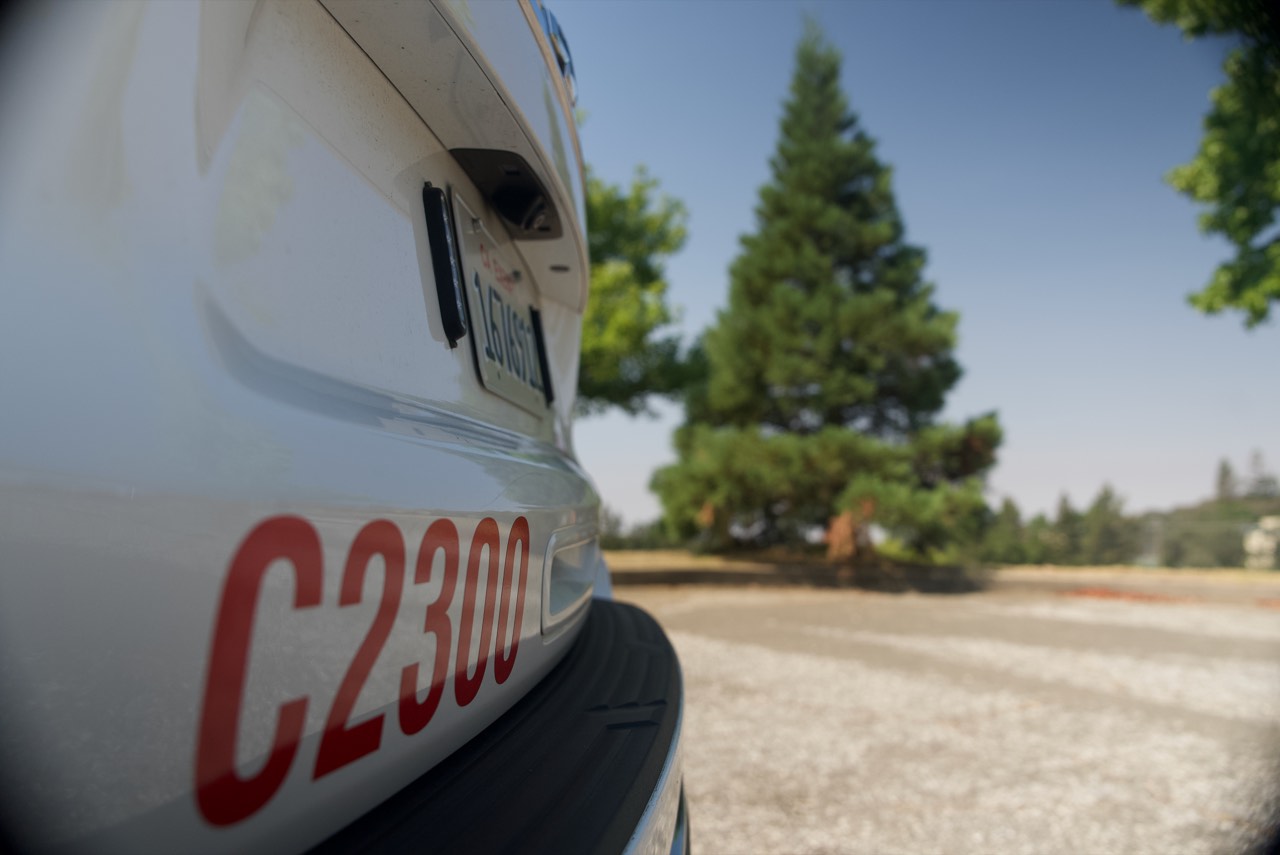
Close view along the front of a white CAL FIRE vehicle lettered C2300, with Chief Waggoner's redwood standing on the far side of the yard
C2300 on the pad, Chief Waggoner's redwood behind it. The trees have outlasted several generations of the fleet.
1970 — Nevada, Yuba & Placer

In 1970 the decision was made to consolidate Nevada, Yuba and Placer counties into one ranger unit. The logical thinking was that Nevada City station would become the headquarters for the new NYP unit.

However, Auburn — a new station on unique ground, sitting on Interstate 80 almost as a hub, close enough to run to anywhere in the three counties, with a state-of-the-art dispatch center and headquarters facilities — was designated the new headquarters for NYP. Mike Brock was selected as the new unit chief in 1970.

The property he had gone after five years earlier decided the question. The unit came to the station.

January 1, 1971 is the official date of the Nevada-Yuba-Placer Ranger Unit.

What Consolidation Bought — Land Area
The three counties that became one ranger unit in 1970, by land area. Placer alone runs from the valley floor near Roseville to the Sierra crest above Lake Tahoe.

Source: U.S. Census Bureau TIGER/Line county geography (land area, water excluded) · Placer 1,407.4 · Nevada 957.8 · Yuba 632.0 = 2,997.2 sq mi. County lines are the modern boundaries, unchanged since 1970. Note that a ranger unit's direct protection area is not the whole county — federal, local and contract lands carve into it — so read this as the footprint the unit sat inside, not its exact responsibility.

The Run of It
A chief, a station, and two trees.
July 9, 1908
William "Mike" Brock is born.
1927
The Division of Forestry is created within the Department of Natural Resources.
June 1933
Brock goes to work for CDF in Nevada County — the start of forty years.
1961
The Division of Forestry moves into the newly created Department of Conservation — the agency name stitched on the patch.
1965–1966
Brock, then Placer County ranger unit chief, secures the property along I-80 above Auburn overlooking the American River Canyon.
1967
Funding obtained; Auburn Station 10 is built on that ground — new headquarters facilities and a state-of-the-art dispatch center.
1967 · Tree one
During construction, Brock plants a small redwood out the back door of the headquarters office building.
Fall 1968
Auburn is first staffed — among that first crew, Ed Waggoner.
1970
Nevada, Yuba and Placer are consolidated into one ranger unit. Auburn is designated headquarters over Nevada City. Mike Brock becomes the first NYP unit chief.
Jan 1, 1971
The official date of the Nevada-Yuba-Placer Ranger Unit.
1973
Chief Brock retires after forty years, and is presented his retirement badge at ceremonies in Auburn. He settles in Meadow Vista, a few ridges up the Sierras from the station he built.
1977
The Division of Forestry is elevated to the California Department of Forestry — the patch on this page becomes history.
January 15, 1993
Mike Brock dies in Meadow Vista, at 84. At his funeral the family hands out tiny redwood seedlings — his favorite tree — and asks those attending to plant them in his honor.
1993 · Tree two
Ed Waggoner, then operations chief of NYP, carries his seedling back to Auburn headquarters and plants it out front of the headquarters building.
Today
The 1967 redwood stands 60 to 70 feet, with a plaque dedicated to Mike Brock, the first NYP chief. The 1993 redwood is past 20 feet and climbing.
Meadow Vista

Chief Brock retired in 1973 and lived in nearby Meadow Vista until January 1993 — twenty years, close enough to the unit to watch it grow up without ever needing to run it again. He had gone to work for CDF in Nevada County in June 1933 and finished forty years later as the ranger in charge of Nevada-Yuba-Placer, holding Ranger Badge No. 2 for most of them.
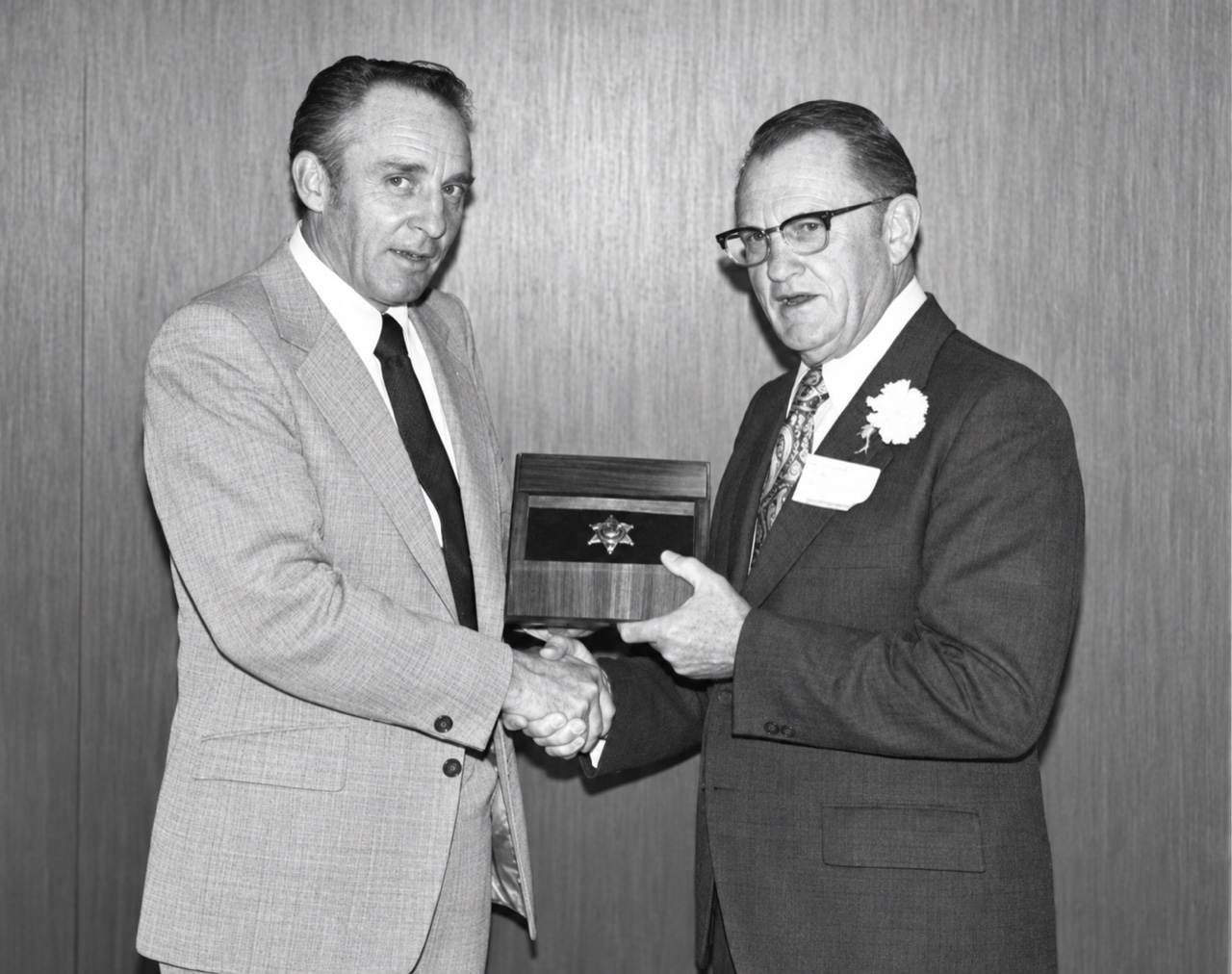
Two men in suits shaking hands, one presenting a wooden case with a star badge mounted in it
Ceremonies in Auburn honoring the retirement of W. F. “Mike” Brock (right), who held Ranger Badge No. 2 for many years. Presenting the retirement badge and recognizing 40 years of service is Chief Deputy State Forester Larry Richey.
What the Family Handed Out

At his funeral the family handed out tiny redwood seedlings — his favorite tree — and asked the attendees to plant the seedling in honor of Mike Brock.

I took my seedling back to Auburn headquarters and planted it out front of the headquarters building.

It is now better than twenty feet high.

So there are two of them on that ground now. One planted by the man who found the property, out the back door of the building he got built. One planted twenty-six years later by someone who came to his funeral, out the front. The older of the two has been standing on that ridge above the American River Canyon since before the unit had a name.
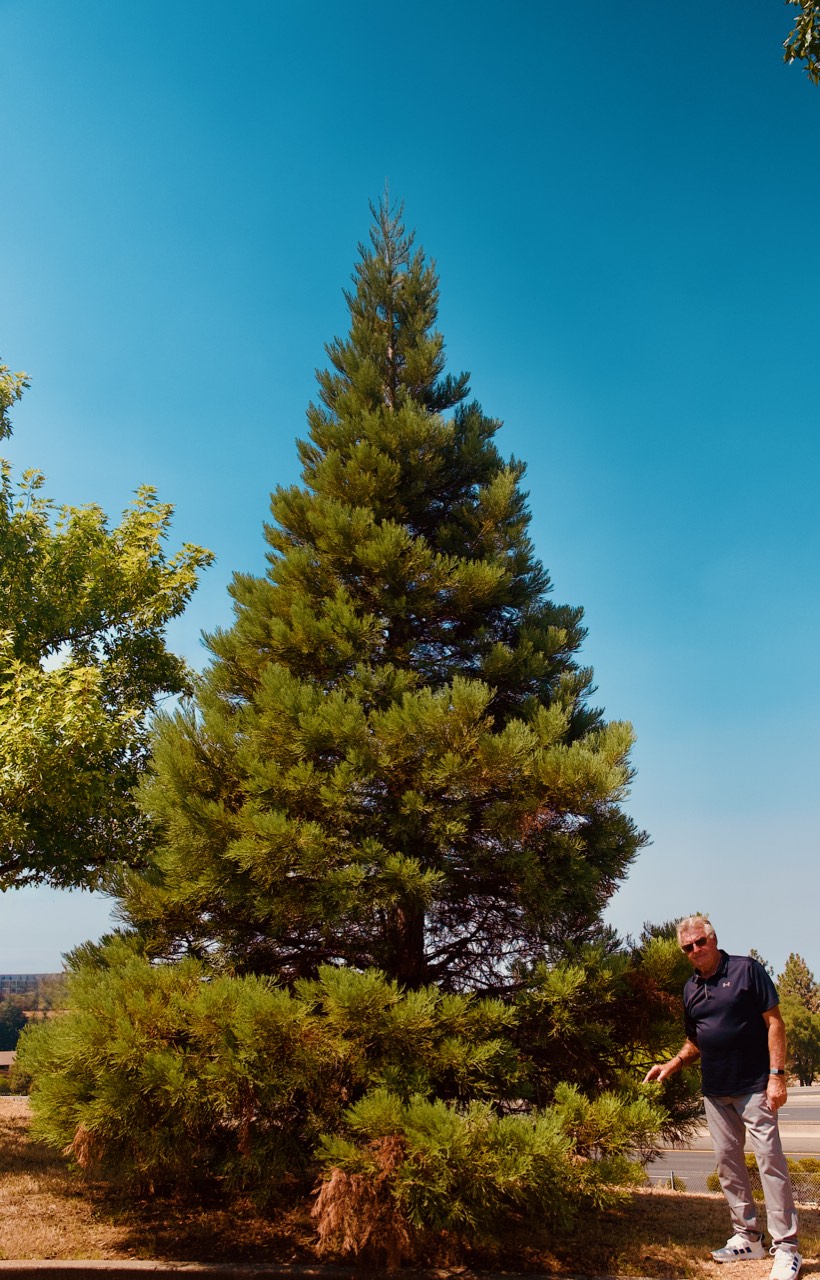
Chief Ed Waggoner standing beside a young coast redwood roughly four times his height, out front of the Auburn headquarters building
Chief Ed Waggoner beside his tree — the seedling he carried back from the funeral in January 1993, planted out front of the headquarters building.
Two Redwoods, Station 10
Only two heights were ever put on these trees — 60–70 ft for Brock's, 20+ ft for Waggoner's. Everything between planting and now is a curve fitted to those numbers. Drag the year to walk the two trees forward.
2026
Brock's redwood
planted 1967
—
Waggoner's redwood
planted 1993
—
Difference
—

Brock 1967
Waggoner 1993
Reported height
Beyond today — projection

How this is drawn. Height follows a monomolecular growth curve — fast when young, flattening as the tree nears maturity, which is taken as 150 ft: coast redwood (Sequoia sempervirens) planted inland in the Sierra foothills grows well but never reaches its coastal extremes. Planting sizes are assumed too — a 3-foot nursery tree in 1967, a 6-inch seedling in 1993 — and each tree's growth rate is then solved so its curve passes through the height reported for it today. The shaded band is that same fit run through the low and high ends of each reported range. This is the shape of two trees growing, pinned to two eyeball measurements — not a survey.
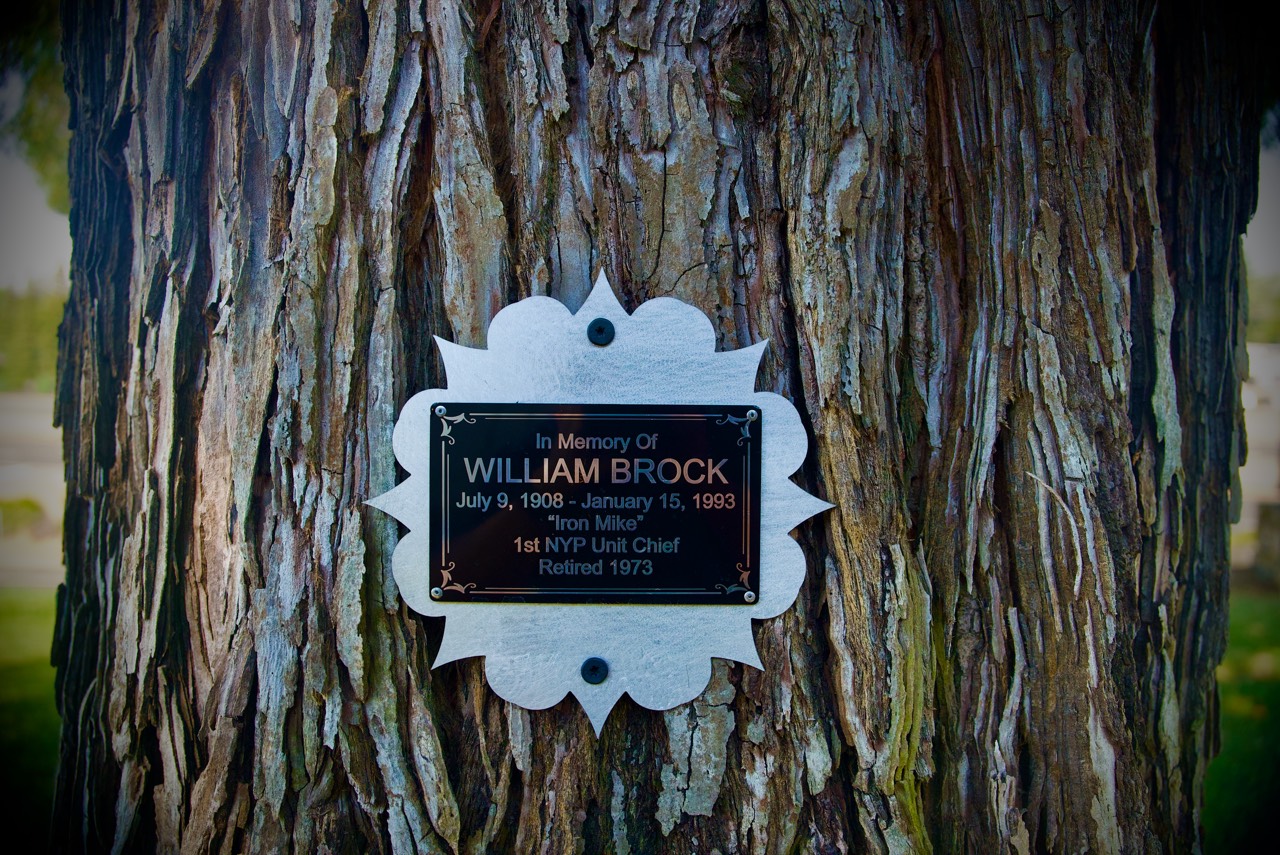
Dedicated
A bronze plaque on a scalloped steel backing, bolted to the deeply furrowed bark of a redwood: In Memory Of William Brock, July 9 1908 – January 15 1993, Iron Mike, 1st NYP Unit Chief, Retired 1973
The plaque on Brock's redwood. The nickname in quotation marks is where this story got its title.

Brock got his nickname from the firefighters who worked for him.

A bigger than life man, a hard-nosed, aggressive firefighter from the old school, Iron Mike didn't like air tankers — they were just too expensive! Hard charging hand crews, engine companies and bulldozers is what put out wildland fires.

These two redwoods at Auburn Station 10 are dedicated to the legacy of William "Mike" Brock, the first ranger unit chief of NYP.

Notes on the Record
The account — Ed Waggoner, Operations Chief (ret.), Nevada-Yuba-Placer Unit.
The narrative here is Chief Waggoner's, written from memory. Dates given as ranges in his draft ("1965 or 1966") are kept as ranges. Nothing has been sharpened beyond what he wrote.
Locations — Auburn Station 10, 13760 Lincoln Way, Auburn (CAL FIRE NEU / Placer County Fire headquarters) · the former Placer County yard on Highway 49, 501 El Dorado St, now Auburn State Recreation Area headquarters.
The two Auburn sites were geocoded from their published street addresses and then corrected on the ground by Chief Waggoner, who also pinned the headquarters building and both redwoods. The Nevada City pin is the present-day CAL FIRE station — it stands for the station, not for a verified 1970 building footprint.
County geography — U.S. Census Bureau, TIGER/Line county boundaries and land area.
Boundaries simplified to roughly 150 m for drawing at this scale.
The site plans — building footprints from OpenStreetMap; the headquarters and both redwoods pinned on the ground by Chief Waggoner.
Come in close on either headquarters and its buildings rise out of the terrain — thirteen at Station 10, two at the old Highway 49 yard, which is all OpenStreetMap has mapped there. Nevada City has no building footprints in OpenStreetMap at all, only a parcel boundary, so its station is outlined flat on the ground rather than built. At Station 10 the single pin also opens into the site: the office building Brock got built, the 1967 redwood behind it, the 1993 redwood out front. Heights are estimated from the building type — OpenStreetMap carries no height or storey tag on any of the fifteen — so treat the massing as a sketch of the yard, not an elevation drawing. Only these two parcels are built; the rest of the unit stays bare terrain.
Agency history — California Natural Resources Agency; Board of Forestry and Fire Protection.
The Division of Forestry sat under the Department of Conservation from 1961, and became the Department of Forestry in 1977 — bracketing the patch and Brock's tenure as chief.
The redwood curves — modeled, not measured.
See the note under the chart. If anyone ever puts a real height on either tree, the model should give way to the tape.

For the men and women of the Nevada-Yuba-Placer Unit — and for the chief who picked the ground.

Nevada · Yuba · Placer
The Unit, Before It Was One
Three counties · 2,997 sq mi of land